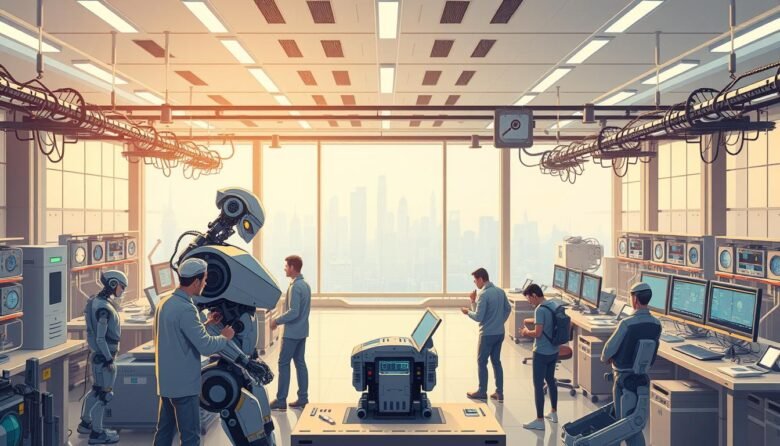
The world of technology is buzzing with exciting new opportunities. The global market for industrial robots has hit a record high of $16.5 billion. This shows a huge surge in the robotics industry.
This growth is creating many new jobs that require fresh skills. We are seeing a major shift in how work gets done. The future is being shaped by smart machines and intelligent systems.
These changes are driven by amazing new technologies. From self-driving cars to robots that work alongside people, innovation is everywhere. This guide will explore the key trends creating these new career paths.
Understanding this shift is vital for anyone planning their career. The demand for skilled talent is higher than ever. This is true across many different fields and industries in the United States and beyond.
Key Takeaways
- The market for industrial robots has reached a historic value of $16.5 billion.
- Technological progress is creating entirely new job opportunities.
- There is a significant and growing demand for people with new skills.
- These changes are affecting a wide range of industries.
- Staying informed about these developments is crucial for career planning.
- Collaborative robots and AI systems are defining the future of work.
Revolutionizing Industries with Cutting-Edge Technologies
Modern businesses are embracing powerful new tools that transform how they operate. These innovations create smarter workflows and better outcomes across many sectors.
Harnessing Artificial Intelligence and Machine Learning
Artificial intelligence helps machines understand complex information. Machine learning allows them to improve from experience. These technologies process huge amounts of data quickly.
Analytical AI examines sensor information to handle unpredictable situations. Physical AI learns through virtual practice sessions. This creates more adaptable solutions for various environments.
Integrating Digital Twin and IoT Solutions
Digital Twin technology builds virtual copies of physical systems. This allows safe testing and optimization. Companies can simulate real-world conditions without risk.
When combined with IoT devices, these systems share real-time information. This integration helps predict maintenance needs and prevent downtime. The technology supports smarter decision-making across business processes.
These advancements require skilled professionals who understand data analysis and systems integration. The demand for this expertise continues to grow as more industries adopt these technologies.
Exploring Robotics, Automation, Engineering Trends in Industrial Innovation
Factories and workshops are changing fast. A new kind of helper is arriving on the scene. It works right beside people, not in a cage.
These collaborative robots, or cobots, are built for teamwork. They are perfect for smaller manufacturing shops. Their main goal is to boost efficiency and safety.
What makes them special? They are easy to use. A worker can program a cobot without deep technical skills. This opens up automation to many more businesses.
These robots handle jobs that are dull or risky. They might do quality checks or lift heavy parts. This lets human workers focus on more complex tasks.
This partnership improves the entire production line. Workers feel safer and more satisfied. The whole manufacturing process gains flexibility and precision.
By 2025, these collaborative robots will be even smarter. They will adapt on the fly. This continuous improvement makes operations smoother.
Harnessing Artificial Intelligence for Enhanced Robotics Performance
Artificial intelligence is fundamentally reshaping how intelligent machines operate and adapt. These systems now process information and make decisions with remarkable speed. The technology enables machines to handle complex situations effectively.
This evolution represents a major shift in machine capabilities. Traditional programming gives way to genuine learning and adaptation. The results are more flexible and capable systems.
From Analytical to Generative AI Applications
Analytical AI helps machines understand their surroundings through sensor data. It identifies patterns and manages unpredictable elements in various environments. This foundation supports more advanced capabilities.
Generative AI takes this further by creating new possibilities. Machines can train themselves in virtual settings, building experience safely. This approach reduces risks while accelerating skill development.
Innovative Uses of AI in Real-Time Decision Making
Real-time adaptation allows machines to respond instantly to changing conditions. They adjust operations when unexpected situations arise. This dynamic responsiveness improves overall performance.
These intelligent systems can predict potential issues before they occur. They recognize complex patterns and plan advanced tasks. The integration of machine learning means continuous improvement over time.
The demand for professionals who understand these technologies continues to grow. Careers in developing smart systems offer exciting opportunities for skilled individuals.
New Business Models and Talent Demand in Emerging Robotics Roles
A major shift in how companies access advanced technology is creating new opportunities. Innovative approaches are making powerful tools available to a wider range of businesses. This change is reshaping the talent needed to succeed.
Robot-as-a-Service and Scalable Automation Solutions
The Robot-as-a-Service (RaaS) model is a game-changer. It lets manufacturers use sophisticated systems without a huge upfront cost. Companies can subscribe to automation like a utility.
This approach dramatically lowers the barrier for small and medium-sized businesses. Providers handle installation and maintenance. This flexibility allows production to scale up or down based on demand.
There is also a growing market for lower-cost solutions. These serve applications where extreme precision is not critical. This opens up automation for many new tasks.
Addressing Labor Shortages with Smart Automation
Many industries face a significant challenge in finding workers. Demographic changes are creating persistent gaps in the workforce. Smart systems offer a practical solution to this problem.
These technologies excel at handling repetitive or hazardous jobs. This allows human employees to focus on more complex and engaging work. The use of automation helps maintain consistent production levels.
This growing demand is creating exciting new career paths. Roles like implementation consultants and automation advisors are vital. They help businesses navigate this new landscape successfully.
Sustainable and Energy-Efficient Solutions in Modern Robotics
Eco-friendly practices have become essential for companies seeking competitive advantage. Meeting UN environmental goals is now a requirement for global suppliers. Intelligent systems help manufacturers achieve these sustainability targets effectively.
Green Technologies and Eco-Friendly Manufacturing Practices
Modern robots excel at tasks requiring high precision. This accuracy dramatically reduces material waste during manufacturing. Better efficiency means less energy consumption overall.
These systems ensure consistent quality in production. Products last longer and need less maintenance. This approach minimizes downtime and operational costs.
In green energy sectors, robots enable cost-effective solutions. They help scale up solar panel and battery production quickly. Sustainable standards are maintained throughout the processes.
The robotics industry itself embraces energy efficiency. Lightweight designs and smart sleep modes reduce power use. Bionic grippers provide strong holding with minimal energy.
These sustainable technologies create new career paths. Environmental specialists help companies optimize eco-friendly solutions. Doing good for the planet also improves business outcomes.
Embracing the Future: Investing in Talent for Robotics Innovation
Navigating the evolving landscape of advanced systems requires more than just technical investment—it demands human capital development. The true potential of these technologies hinges on cultivating professionals who can design, implement, and maintain sophisticated solutions across diverse industries.
Continuous learning and upskilling are essential strategies for staying relevant. Educational institutions and businesses must collaborate to prepare the next generation for working effectively alongside intelligent machines. This partnership nurtures human creativity and strategic thinking that technology cannot replicate.
The expansion into construction, laboratory work, and warehousing creates diverse career opportunities. Recent supply chain disruptions have increased demand for domestic production capacity. Companies that prioritize talent development will maintain competitive advantage while driving innovation that benefits society.